-
Choose Your Topic:
Living with Social Anxiety

Living with social anxiety often feels like a hidden struggle that quietly shapes everyday life. While most people experience nerves before a presentation, date, or social event, those with Social Anxiety Disorder (SAD) face overwhelming fear that their body interprets as danger. Heart racing, sweaty palms, trembling, and spiraling thoughts like “Everyone will notice I’m nervous” or “I’ll embarrass myself and ruin everything”. This isn’t simple shyness — SAD is a recognized mental health condition and one of the most common anxiety disorders worldwide. For many, it reshapes how they move through the world, influencing work, relationships, friendships, and even their sense of identity.
Day-to-day life with SAD can feel exhausting. A simple team meeting may trigger dread, lunch with coworkers might lead to rehearsed excuses, and social gatherings often become events to avoid altogether. Physical symptoms like blushing, nausea, or shaky speech combine with constant self-consciousness and safety behaviors such as avoiding eye contact or speaking as little as possible. Adults often camouflage their struggles, appearing “quiet” or “reserved,” but underneath lies intense anxiety and self-doubt. Over time, avoidance strategies become ingrained, leading to stalled careers, strained relationships, isolation, and even health issues like headaches, sleep problems, or depression. Years of hiding anxiety erode self-esteem, leaving many with the painful belief that they are “defective” or unworthy of connection.
The hopeful truth is that social anxiety is treatable, though many adults suffer for years before seeking help. Evidence-based approaches such as Cognitive Behavioral Therapy (CBT), mindfulness practices, medication, and group therapy can make a profound difference. Recovery doesn’t mean becoming the life of the party — it means reclaiming freedom from fear. Adults who pursue treatment often report being able to attend work events without weeks of dread, build meaningful friendships, and speak up when they have something to say. If this description feels familiar, know that you are not broken or destined for isolation. Social anxiety feels permanent because the brain has practiced fear for years, but it can relearn. Naming the struggle is often the first step, and with support, life truly can get better.
Facts About Suicide

US Suicide Rates Over Time (2000–2023) and Overall Trends
- Covers age-adjusted rates from 2003–2023, with overall rate at 14.1 per 100,000 in 2023 (stable from 14.2 in 2018). Includes trends by sex.
- CDC Suicide Data and Statistics page (updated March 2025): Summarizes rates, with increases noted from 2000–2018 and stability thereafter.
- NIMH Suicide Statistics: Aligns with CDC data on male/female rates (e.g., ~22.7–22.8 for males, ~5.9 for females in 2023).
For 2024 provisional data (age-adjusted rate ~13.7 per 100,000, ~48,800 deaths): KFF analysis of CDC WONDER and NCHS reports.
US Suicide Rates by Age Group and Sex (2023 Crude Rates)
- NIMH Suicide page (based on CDC data): Provides the exact crude rates table by age and sex for 2023 (e.g., males 75+: 40.7%...females 45–64: 8.6% / lowest in 10–14 group).
- CDC NCHS Data Brief No. 541: Details age-specific changes, confirming highest male rates in 75+ and female peaks in 45–64.
Suicide Deaths by Method (2023–2024)
- NIMH/CDC data for 2023: Firearms accounted for ~55%+ of suicides (~27,300 out of 49,316 total deaths), followed by suffocation (~24–30%) and poisoning (~9–15%).
- AFSP Suicide Statistics (drawing from CDC WONDER 2023): Firearms at 55.36%.
- CDC FastStats (2024 provisional): Firearm suicides ~27,593 out of 48,824 total suicides (~56–57%).
- Additional context from KFF (2024): Firearms reached 57% of suicides
Global Suicide Rates by Age Group (2023 Estimate)
- Our World in Data (based on WHO/IHME Global Burden of Disease estimates): Suicide rates per 100,000 — 5–14: 0.8; 15–49: 11; 50–69: 12.9; 70+: 22.6 (overall ~9.5).
- WHO Suicide Fact Sheet (updated 2025): Global context (>720,000 deaths/year; third leading cause for ages 15–29).
These graphs were generated using the values directly from or closely aligned with the above sources for accuracy. For full raw datasets, visit:
- CDC WONDER (wonder.cdc.gov) for customizable queries.
- NIMH: nimh.nih.gov/health/statistics/suicide
- AFSP: afsp.org/suicide-statistics
- Our World in Data / WHO: ourworldindata.org/suicide
Veterans & Mental Conditions

Military service demands extraordinary sacrifice — not only physical, but psychological. When veterans return home, they open carry invisible wounds that are just as debilitating as any physical injury. Mental health conditions among veterans represent one of the most critical public health challenges of our time, yet they remain widely misunderstood, under-diagnosed, and undertreated.
At JSA Mental Health Consultants, we believe that every veteran who has served deserves access to compassionate, evidence-based mental health care. The Hidden Battle After Service Understanding the scope and nature of these challenges is the essential first step toward meaningful change.
How JSA Mental Health Can Help
At JSA Mental Health Consultants, we are deeply committed to supporting the veteran community. Our clinicians bring specialized training in trauma, military culture, and veteran-specific mental health challenges. We provide a safe, confidential, and judgment-free environment where veterans can finally speak — and be genuinely heard.
We offer individual therapy, group sessions, medication management, crisis intervention, and coordinated care planning. Whether you are a veteran struggling for the first time, a family member seeking guidance, or a service member preparing for transition, we are here with expertise and compassion at every step of the journey.
You carried the weight of service. You do not have to carry this alone.
PTSD: The Invisible Wound
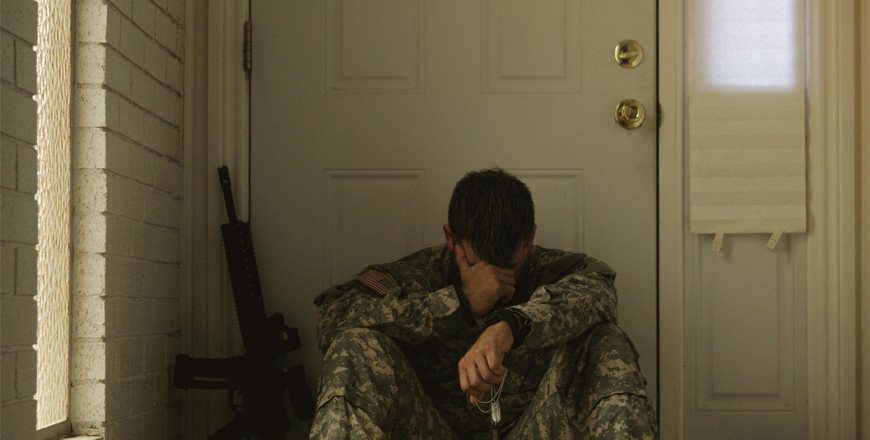
How PTSD Develops in Veterans
PTSD does not develop in a uniform way. The path from traumatic exposure to a clinical diagnosis involves a complex interplay of the nature and intensity of the trauma, individual neurobiological vulnerability, prior trauma history, social support, and the context of post-trauma recovery. For veterans, this pathway is shaped by the unique stressors and culture of military service.
- 1. Traumatic Exposure During Service - The foundation of military PTSD is exposure to trauma — combat, IED blasts, the death of fellow service members, civilian casualties, sexual assault (Military Sexual Trauma), or prolonged threat under hostile conditions. Many veterans experience multiple, repeated traumas over multiple deployments, compounding neurobiological damage.
- 2. Acute Stress Response - In the immediate aftermath of trauma, the brain and body activate survival mechanisms — heightened alertness, emotional numbing, adrenaline surges, intrusive memories. For most people, these acute stress responses resolve naturally within weeks. For those who develop PTSD, the nervous system fails to return to baseline.
- 3. Neurobiological Entrenchment - Over time, the brain's threat-response circuits become sensitized and entrenched. The amygdala remains hyperactive, the prefrontal cortex loses regulatory control, and the hippocampus struggles to contextualize traumatic memories as "past." The trauma is experienced as perpetually present — not as a memory but as a current reality.
- 4. Transition and Civilian Life Triggers - For many veterans, the transition to civilian life — loss of structure, mission, and camaraderie — acts as a powerful trigger. Civilian environments, sounds (fireworks, traffic backfires), social situations, and relationship stressors can activate trauma responses. Without military community support, isolation deepens and symptoms intensify.
- 5. Delayed-Onset PTSD - In a significant proportion of veterans, full PTSD symptoms do not emerge until months or years after service ends. This delayed onset is well documented in clinical literature and often catches both veterans and their families completely off guard, as they may have believed the worst was behind them.
Risks Factors for Veteran PTSD
Not every veteran exposed to trauma develops PTSD. Understanding the factors that increase risk can help identify those who may need earlier or more intensive intervention.
- Combat Intensity: Direct combat exposure, especially involving killing or witnessing mass casualties, is the strongest predictor of PTSD in veterans. Multiple deployments multiply risk significantly.
- Prior Trauma History: Veterans with a history of childhood adversity, abuse, or prior traumatic events have a sensitized stressresponse system, increasing vulnerability to PTSD after military trauma.
- Traumatic Brain Injury: TBI — extremely common in blastexposed veterans — significantly raises PTSD risk and complicates both symptom presentation and treatment response.
- Lack of Social Support: Weak social support networks post-deployment are a powerful predictor of PTSD chronicity. Isolation amplifies hypervigilance and removes protective buffering against trauma symptoms.
- Military Sexual Trauma: Women veterans experience Military Sexual Trauma (MST) at disproportionately high rates. MST is one of the strongest predictors of PTSD in female veterans, often compounded by institutional failures in reporting.
- Stigma & Help-Avoidance: Military culture's emphasis on stoicism and self-reliance delays help-seeking, allowing untreated PTSD to entrench neurologically and symptomatically over time.
Warning Signs: When PTSD Becomes a Crisis
Veteran PTSD carries significantly elevated suicide risk. The following warning signs require immediate professional attention:
- Talking about wanting to die or expressing hopelessness
- Withdrawing completely from family and friends
- Giving away cherished possessions
- Dramatic increase in alcohol or substance use
- Reckless or self-destructive behavior
- Expressing feeling like a burden to others
- Sudden calmness after a period of severe depression
- Researching or acquiring means of self-harm
PTSD and the Veteran's Family
PTSD does not exist in isolation. It ripples through the entire family system. Spouses and partners of veterans with PTSD report significantly higher rates of depression, anxiety, and what researchers call "secondary traumatic stress" — trauma symptoms that develop in those who are close to a trauma survivor. Children in households where a parent has untreated PTSD are at elevated risk for behavioral, academic, and emotional difficulties.
The emotional withdrawal, anger dysregulation, hypervigilance, and communication difficulties associated with PTSD can create profound relationship strain. Partners often feel they are living with a stranger — the person they knew before deployment seems replaced by someone unreachable, volatile, or absent. This grief compounds the veteran's own shame and isolation.
Family-inclusive approaches — including couples therapy, family psychoeducation, and caregiver support — are essential components of comprehensive veteran PTSD treatment. When families understand the neurobiology of PTSD and learn to respond with informed compassion rather than confusion or frustration, outcomes improve dramatically for all involved.
Recovery Is Real — And It Is Possible
Perhaps the most important thing to know about PTSD in veterans is this: it responds to treatment. Clinical trials consistently show that 60–80% of veterans who complete evidence-based PTSD treatments experience significant symptom reduction. Many achieve full remission. Recovery does not mean forgetting — it means no longer being controlled by what happened. It means reclaiming the ability to be present, to feel safe, to connect.
The path to recovery requires courage — the same courage that military service demands. It requires honesty, vulnerability, and a willingness to confront what has been avoided. It requires a skilled, compassionate clinician who understands both the trauma and the person who has survived it. It requires time and persistence. But it is a path that thousands of veterans have walked successfully, and it is a path that JSA Mental Health Consultants is honored to walk alongside you.
If you are a veteran living with PTSD — or if you love one — please reach out. The battle for your health and wellbeing is one worth fighting. And no one should fight it alone.
You Served. Now Let Us Serve You.
Schizophrenia

Schizophrenia is a psychotic disorder — meaning it involves episodes in which a person loses touch with reality. It is classified as a chronic condition because it typically requires long-term management, though its severity and course vary significantly from person to person.
Critically, schizophrenia is not the same as dissociative identity disorder (formerly called “multiple personality disorder”). The popular notion of a “split mind” flipping between different personalities is a misconception. The word’s Greek roots — schizein (to split) and phrēn (mind) — referred to a fragmentation of mental functions, not a splitting of identity.
Schizophrenia typically emerges in late adolescence or early adulthood. Men tend to develop symptoms in their late teens to mid-twenties; women often experience onset in their late twenties to early thirties. The condition rarely begins in childhood or after age 45, though both are possible.
Mental health professionals organize schizophrenia’s symptoms into three broad categories.
1. Positive Symptoms
“Positive” here does not mean good — it refers to experiences that are added to normal functioning, things that are present but should not be.- Hallucinations are perceptions without external stimuli. Auditory hallucinations — hearing voices — are the most common, affecting roughly 70% of people with schizophrenia. These voices may comment on the person’s actions, issue commands, argue with each other, or say frightening things. Visual, tactile, olfactory, and taste hallucinations can also occur, though less frequently
- Delusions are fixed, false beliefs held with absolute conviction, resistant to reason or contrary evidence. Common types include:
- 1. Persecutory delusions — believing one is being watched, followed, or plotted against
- 2. Referential delusions — believing that random events (a TV broadcast, a stranger’s glance) carry special personal messages
- 3. Grandiose delusions — believing one has extraordinary powers, wealth, or a special mission
- 4. Thought insertion or withdrawal — believing outside forces are placing thoughts into or removing them from one’s mind
- Disorganized thinking and speech — Thoughts may jump erratically between unrelated topics (“loose associations”), or become so tangled as to be nearly incomprehensible (“word salad”).
- Disorganized or abnormal motor behavior — This can range from childlike silliness to unpredictable agitation, or at the extreme end, catatonia — a state of unresponsiveness or rigid, unusual posturing.
2. Negative Symptoms
Negative symptoms represent a diminishment of normal functioning — things that are absent but should be present.- Flat affect — Reduced emotional expression; speaking in a monotone, showing little facial expression
- Alogia — Poverty of speech; brief, empty replies; difficulty generating conversation
- Avolition — Lack of motivation; inability to initiate or sustain goal-directed activity
- Anhedonia — Diminished ability to experience pleasure from activities once enjoyed
- Social withdrawal — Reduced interest in social contact and relationships
3. Cognitive Symptoms
Often overlooked but profoundly impactful, cognitive symptoms affect:- Working memory and the ability to use information immediately after learning it
- Attention and concentration
- Executive function — planning, decision-making, and problem-solving
- Processing speed
Living With Schizophrenia
Recovery does not necessarily mean the absence of all symptoms. For many, recovery means achieving a personally meaningful life — with stable housing, relationships, work or purpose, and a degree of symptom management that allows engagement with the world.Several factors support recovery:
- Medication adherence — Staying on prescribed medications, even when feeling well, is one of the most important factors in preventing relapse
- Avoiding substances — Alcohol and drugs, particularly cannabis and stimulants, can trigger relapses and worsen symptoms
- Stress management — High stress is a known trigger for psychotic episodes; developing personal coping strategies matters
- Social connection — Isolation worsens all aspects of schizophrenia; maintaining relationships, however difficult, is protective
- Meaningful activity — Work, volunteering, creative pursuits, and purpose contribute significantly to wellbeing
Many people with schizophrenia speak of the importance of self-advocacy: learning to recognize their own early warning signs, communicating with their treatment team, and not allowing the diagnosis to define the entirety of who they are.
The Burden of Stigma
Perhaps the greatest obstacle facing people with schizophrenia is not the illness itself, but the stigma attached to it. Media portrayals linking schizophrenia with violence are wildly disproportionate to reality — studies consistently show that people with schizophrenia are far more likely to be victims of violence than perpetrators, and that substance use is a far greater predictor of violence than diagnosis alone.Stigma delays treatment-seeking, damages self-esteem, limits employment and housing opportunities, and strains relationships. Structural stigma — in healthcare systems, insurance policies, and legal frameworks — means that people with schizophrenia frequently receive lower quality care than those with physical illnesses of equivalent severity.
Changing this requires education, honest conversation, and the amplification of lived experience. When people with schizophrenia speak publicly about their lives — and many do, with great courage and eloquence — the human reality of the condition becomes impossible to dismiss.
For Families & Loved Ones
If someone you love has been diagnosed with schizophrenia, the experience can be frightening and disorienting. A few principles may help:- Educate yourself. The more you understand about the illness, the better equipped you will be to respond helpfully rather than reactively.
- Do not take symptoms personally. Paranoid accusations, emotional withdrawal, and communication difficulties are symptoms of an illness, not reflections of your relationship.
- Encourage treatment without ultimatums. Forced or coerced treatment tends to damage trust and therapeutic alliance. Gentle, persistent encouragement works better in most cases.
- Take care of yourself. Caregiver burnout is real. Organizations like NAMI (National Alliance on Mental Illness) offer family education programs, support groups, and helplines.
- Hold hope. Outcomes in schizophrenia are far more variable than the worst-case portrayals suggest. Many people with schizophrenia achieve stability, pursue education and careers, form families, and live rich inner lives.
Dementia
Dementia is not a single disease - it is an umbrella term for a group of symptoms caused by different brain disorders that affect memory, thinking, behavior, and the ability to perform everyday tasks. These changes are severe enough to interfere with daily life, and it is not a normal part of aging.
There are over 100 different diseases and conditions that can cause dementia, but most cases fall into a handful of main types:
- Alzheimer's Disease (most common, about 60-80% of cases)
The brain builds up abnormal proteins (plaques and tangles) that damage and kill brain cells, starting in areas for memory. It usually progresses slowly: earlynsigns are forgetting recent events, getting confused, or repeating questions. Later, it affects language, mood, and daily tasks. - Vascular Dementia (second most common, about 10-20% of cases)
Caused by problems with blood flow to the brain, often from strokes or mini-strokes that block or damage blood vessels. Symptoms can appear suddenly after a stroke or build up stepwise. Common issues: trouble planning, organizing, slower thinking, or walking difficulties. - Lewy Body Dementia (also called Dementia with Lewy Bodies)
Tiny protein deposits (Lewy Bodies) built up in brain cells, disrupting chemicals for thinking and movement. Symptoms include vivid hallucinations (seeing things that aren't there), fluctuating alertness (good days / bad days), Parkinson-like tremors / stiffness, and sleep disturbances (acting out dreams). - Frontotemporal Dementia (less common, often starts younger, ages 45-65)
Affects the front and sides of the brain, leading to big changes in personality, behavior, or language first (rather than memory). People might become compulsive, socially inappropriate, lose empathy, or struggle with speaking / understanding words. These show brain areas affected in frontotemporal dementia.